Objective
Preliminary aerodynamic design of a hypothetical four-seat electric general aviation aircraft, with cruise efficiency as the primary design driver.
Approach
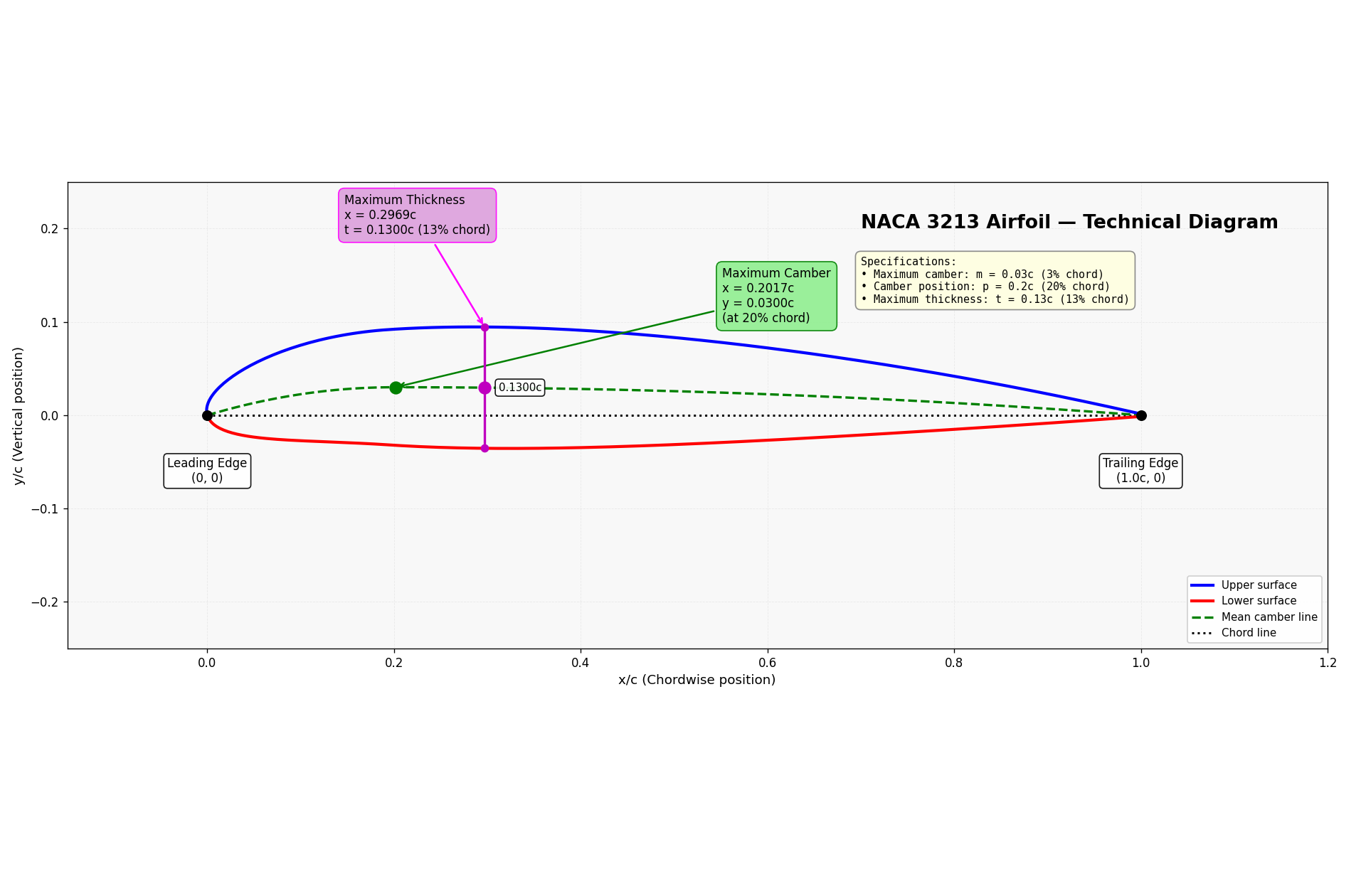
- Built a Python workflow to batch-evaluate 170+ NACA airfoils through XFOIL, scoring each against a weighted performance matrix (lift-to-drag, stall behaviour, pitching moment) to select the wing’s baseline section.
- Refined the resulting 3D wing in XFLR5, iterating aspect ratio and taper ratio to maximise cruise L/D while keeping the design within realistic structural and geometric bounds.
- Ran a high-lift system sizing pass to satisfy take-off and landing stall requirements, alongside compressibility checks (critical Mach number) and a safety assessment including sizing of a two-stage ballistic parachute system.
Result
- Cruise glide ratio: 31.46
- Final grade: 96%
Why this project
This was the first time I treated airfoil selection as an optimisation problem rather than a lookup exercise — writing the scoring workflow forced me to think explicitly about how to trade off lift, drag, and stall margin against each other, not just read the numbers off a polar. It’s the project that pointed me toward CFD and design optimisation as the specific corner of aerodynamics I want to keep working in.