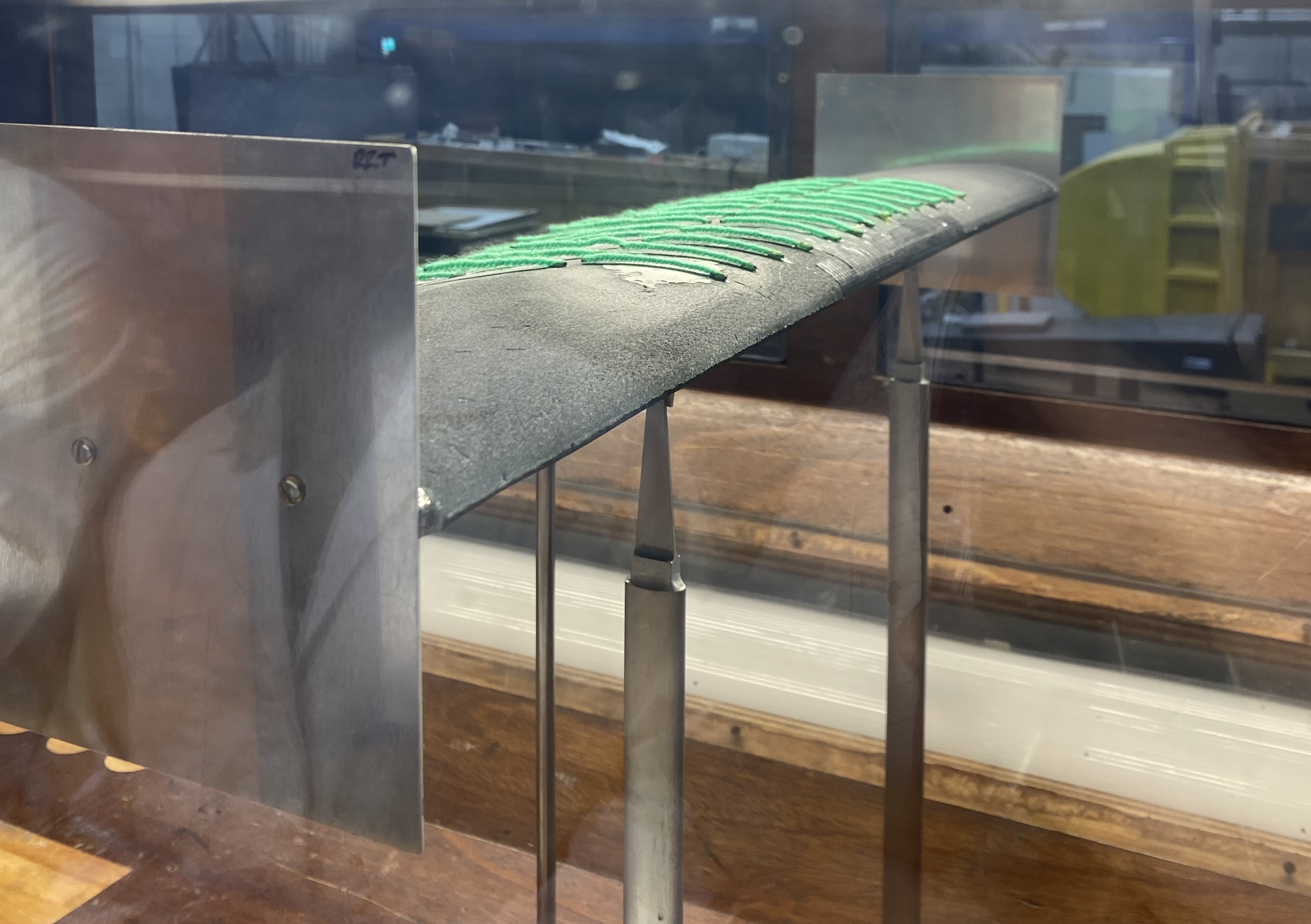
Experimental Investigation of Two- and Three-Dimensional Aerodynamics of a NACA 4412 Airfoil
Objective Team project (team of 5) investigating the aerodynamic behaviour of a NACA 4412 airfoil through low-speed wind tunnel testing, comparing two-dimensional (end-plated) and three-dimensional wing configurations. Approach Tested across multiple Reynolds numbers and angles of attack, collecting surface pressure and force balance data. Applied aerodynamic data reduction techniques to extract lift, drag, pitching moment, aerodynamic centre, and induced drag. Cross-validated experimental results against XFLR5 predictions, theoretical thin-airfoil calculations, and published literature. Quantified the influence of 3D effects (finite span, induced drag) and support interference on measured performance versus the idealised 2D case. Result Final grade: 87% Why this project This is the project where CFD/panel-method predictions stopped being theoretical for me — reconciling the gap between XFLR5’s 2D predictions and what we actually measured on a finite 3D wing (induced drag, support interference) gave me a much sharper feel for where simulation tools break down and why experimental validation matters in aerodynamic design. ...