Aerodynamic Analysis and Optimisation of NACA Airfoils with XFLR5/XFOIL
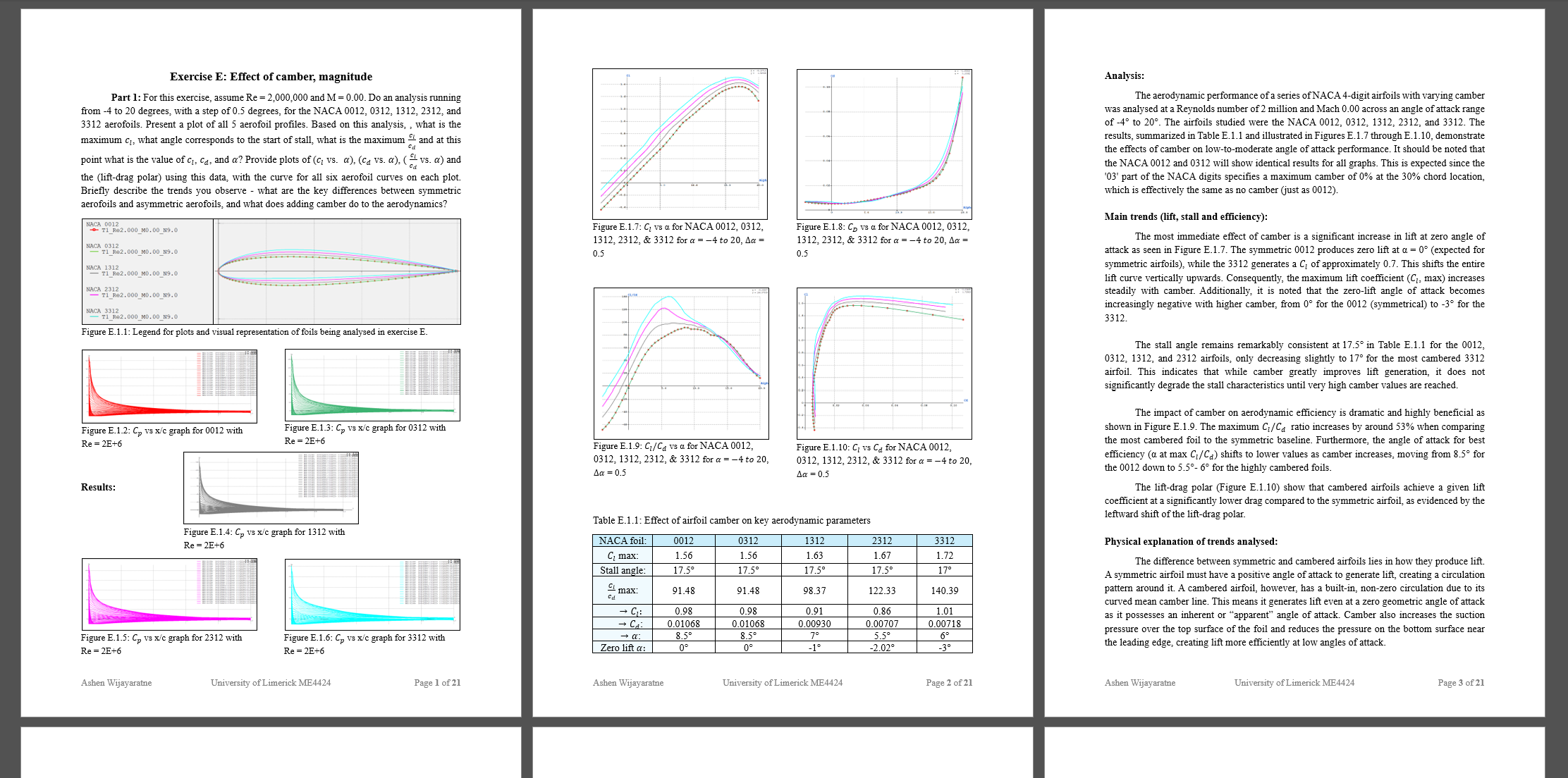
Objective A foundational study into how airfoil geometry drives aerodynamic performance — built to properly understand the fundamentals before relying on optimisation tools as a black box. Approach Used the XFOIL solver (via XFLR5) to systematically vary Reynolds number, Mach number, airfoil thickness, camber magnitude, and camber location across a set of NACA 4-digit airfoils. Analysed the resulting effects on lift, drag, stall behaviour, and overall aerodynamic efficiency. Built a Python automation workflow to run and compare geometries at scale, replacing manual XFLR5 sweeps with a repeatable script. This became the basis for the airfoil-selection workflow used in the wing optimisation project. Result Final grade: 99% Why this project This is where I built the habit of automating the analysis loop instead of running it by hand — a small decision that ended up shaping how I approach every aerodynamics project since. It also gave me a solid, first-principles grip on why camber and thickness distributions do what they do to a polar, rather than just knowing the trend. ...