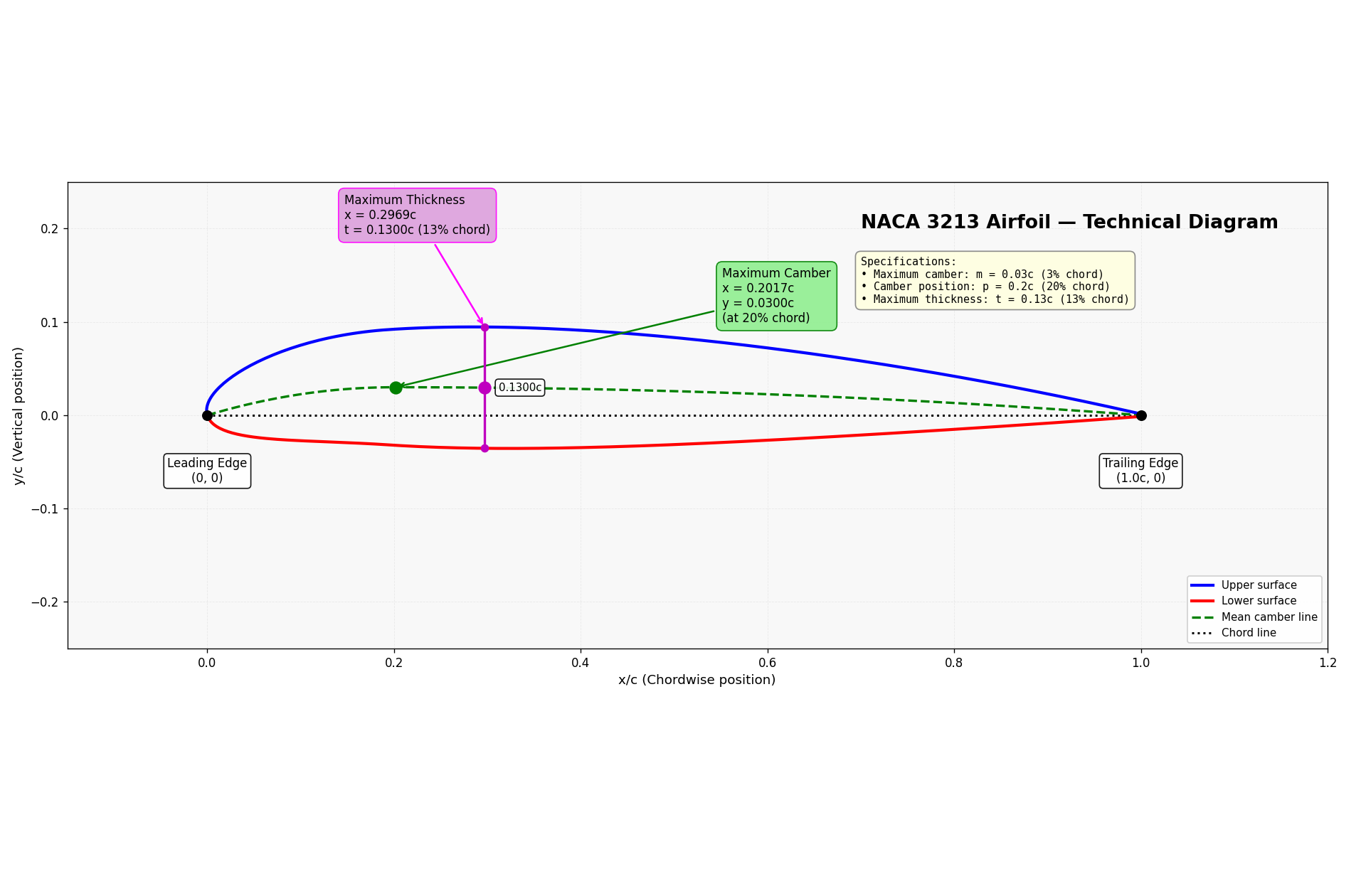
Wing planform and airfoil optimisation output

Preliminary Aerodynamic Design and Wing Optimisation for a Hypothetical Electric General Aviation Aircraft

Objective Preliminary aerodynamic design of a hypothetical four-seat electric general aviation aircraft, with cruise efficiency as the primary design driver. Approach Built a Python workflow to batch-evaluate 170+ NACA airfoils through XFOIL, scoring each against a weighted performance matrix (lift-to-drag, stall behaviour, pitching moment) to select the wing’s baseline section. Refined the resulting 3D wing in XFLR5, iterating aspect ratio and taper ratio to maximise cruise L/D while keeping the design within realistic structural and geometric bounds. Ran a high-lift system sizing pass to satisfy take-off and landing stall requirements, alongside compressibility checks (critical Mach number) and a safety assessment including sizing of a two-stage ballistic parachute system. Result Cruise glide ratio: 31.46 Final grade: 96% Why this project This was the first time I treated airfoil selection as an optimisation problem rather than a lookup exercise — writing the scoring workflow forced me to think explicitly about how to trade off lift, drag, and stall margin against each other, not just read the numbers off a polar. It’s the project that pointed me toward CFD and design optimisation as the specific corner of aerodynamics I want to keep working in. ...
December, 2025 · Ashen Wijayaratne
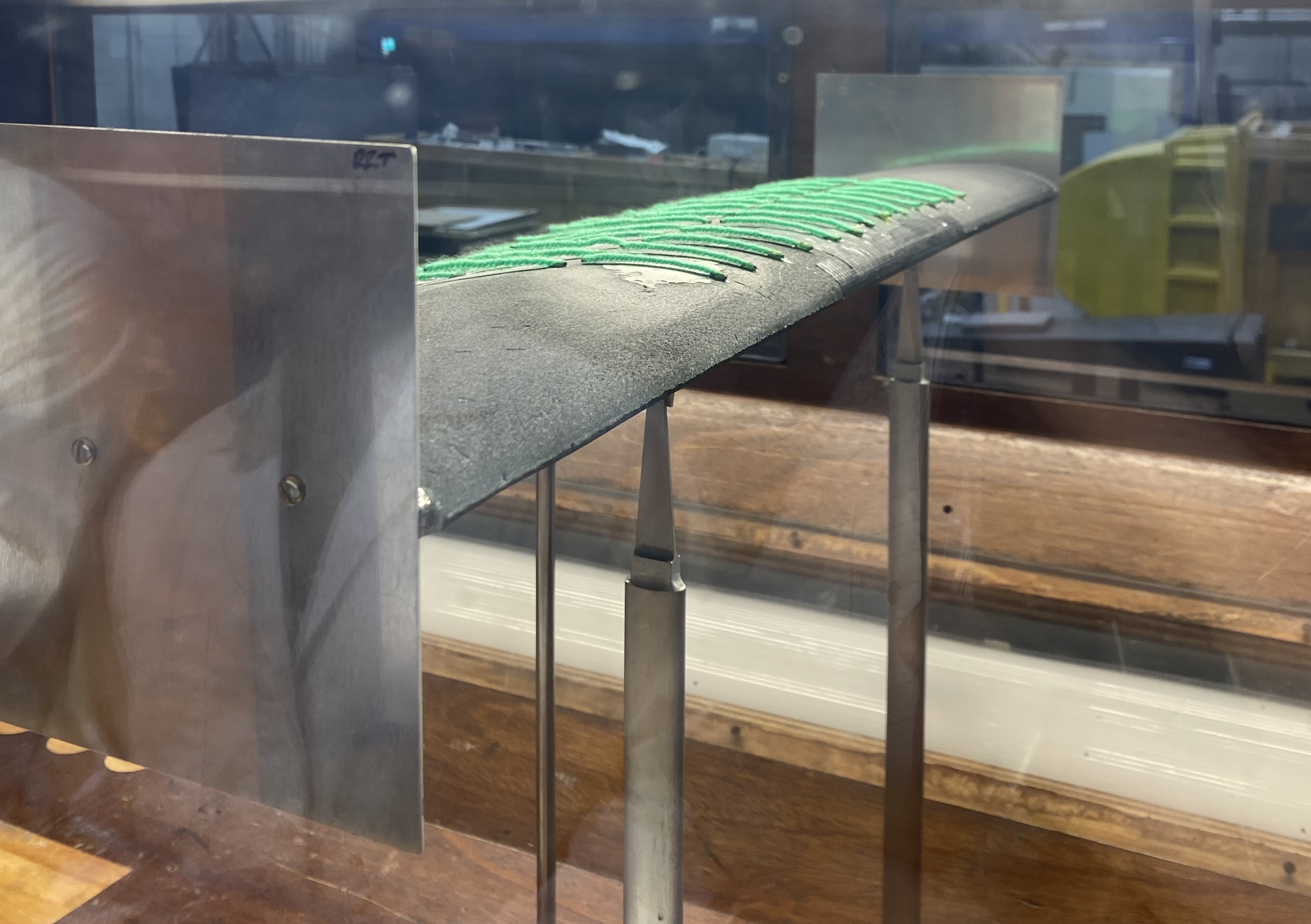
NACA 4412 airfoil under wind tunnel test

Experimental Investigation of Two- and Three-Dimensional Aerodynamics of a NACA 4412 Airfoil

Objective Team project (team of 5) investigating the aerodynamic behaviour of a NACA 4412 airfoil through low-speed wind tunnel testing, comparing two-dimensional (end-plated) and three-dimensional wing configurations. Approach Tested across multiple Reynolds numbers and angles of attack, collecting surface pressure and force balance data. Applied aerodynamic data reduction techniques to extract lift, drag, pitching moment, aerodynamic centre, and induced drag. Cross-validated experimental results against XFLR5 predictions, theoretical thin-airfoil calculations, and published literature. Quantified the influence of 3D effects (finite span, induced drag) and support interference on measured performance versus the idealised 2D case. Result Final grade: 87% Why this project This is the project where CFD/panel-method predictions stopped being theoretical for me — reconciling the gap between XFLR5’s 2D predictions and what we actually measured on a finite 3D wing (induced drag, support interference) gave me a much sharper feel for where simulation tools break down and why experimental validation matters in aerodynamic design. ...

November, 2025 · Ashen Wijayaratne
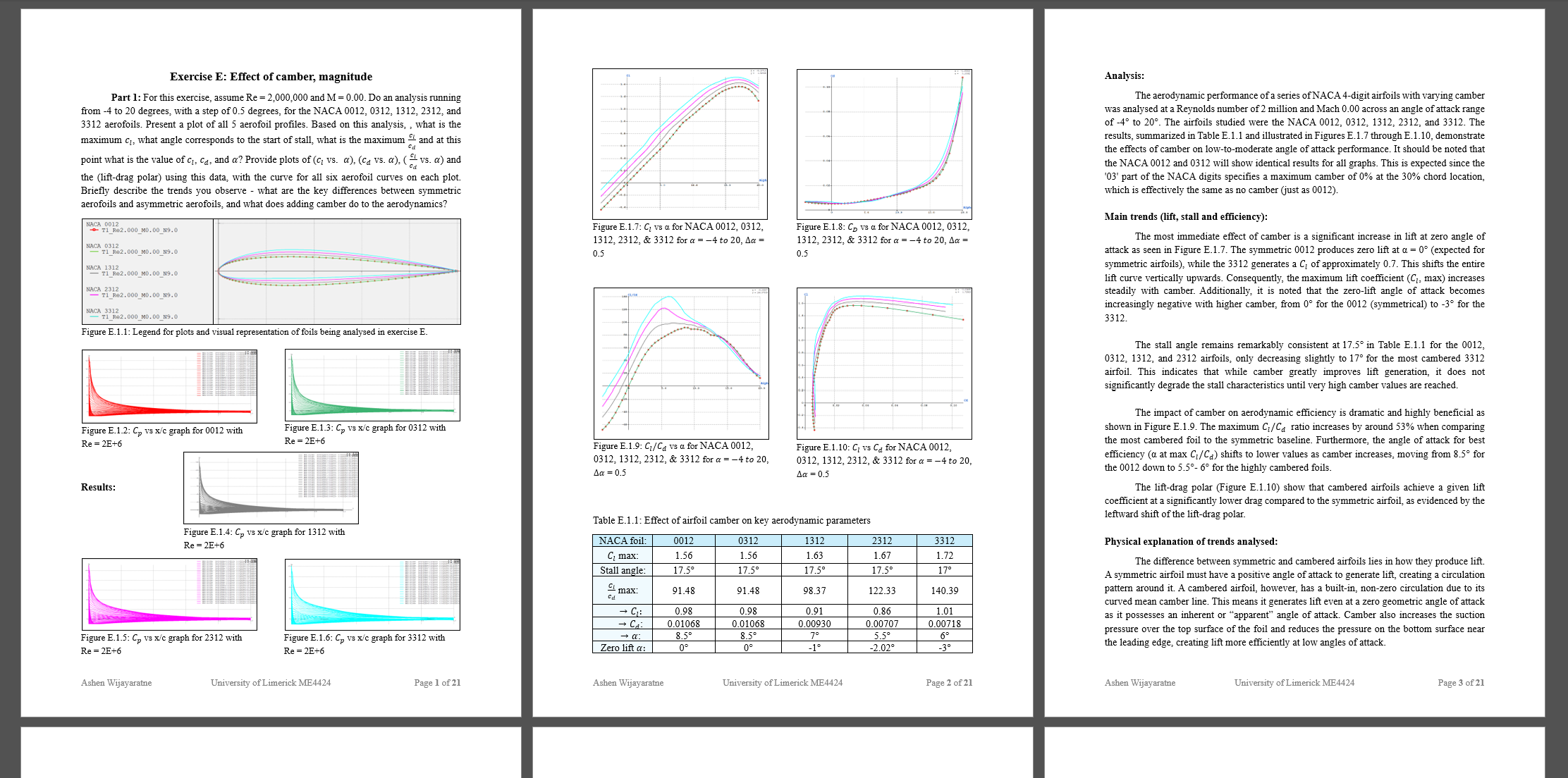
Airfoil polar comparison across camber variations

Aerodynamic Analysis and Optimisation of NACA Airfoils with XFLR5/XFOIL

Objective A foundational study into how airfoil geometry drives aerodynamic performance — built to properly understand the fundamentals before relying on optimisation tools as a black box. Approach Used the XFOIL solver (via XFLR5) to systematically vary Reynolds number, Mach number, airfoil thickness, camber magnitude, and camber location across a set of NACA 4-digit airfoils. Analysed the resulting effects on lift, drag, stall behaviour, and overall aerodynamic efficiency. Built a Python automation workflow to run and compare geometries at scale, replacing manual XFLR5 sweeps with a repeatable script. This became the basis for the airfoil-selection workflow used in the wing optimisation project. Result Final grade: 99% Why this project This is where I built the habit of automating the analysis loop instead of running it by hand — a small decision that ended up shaping how I approach every aerodynamics project since. It also gave me a solid, first-principles grip on why camber and thickness distributions do what they do to a polar, rather than just knowing the trend. ...

October, 2025 · Ashen Wijayaratne